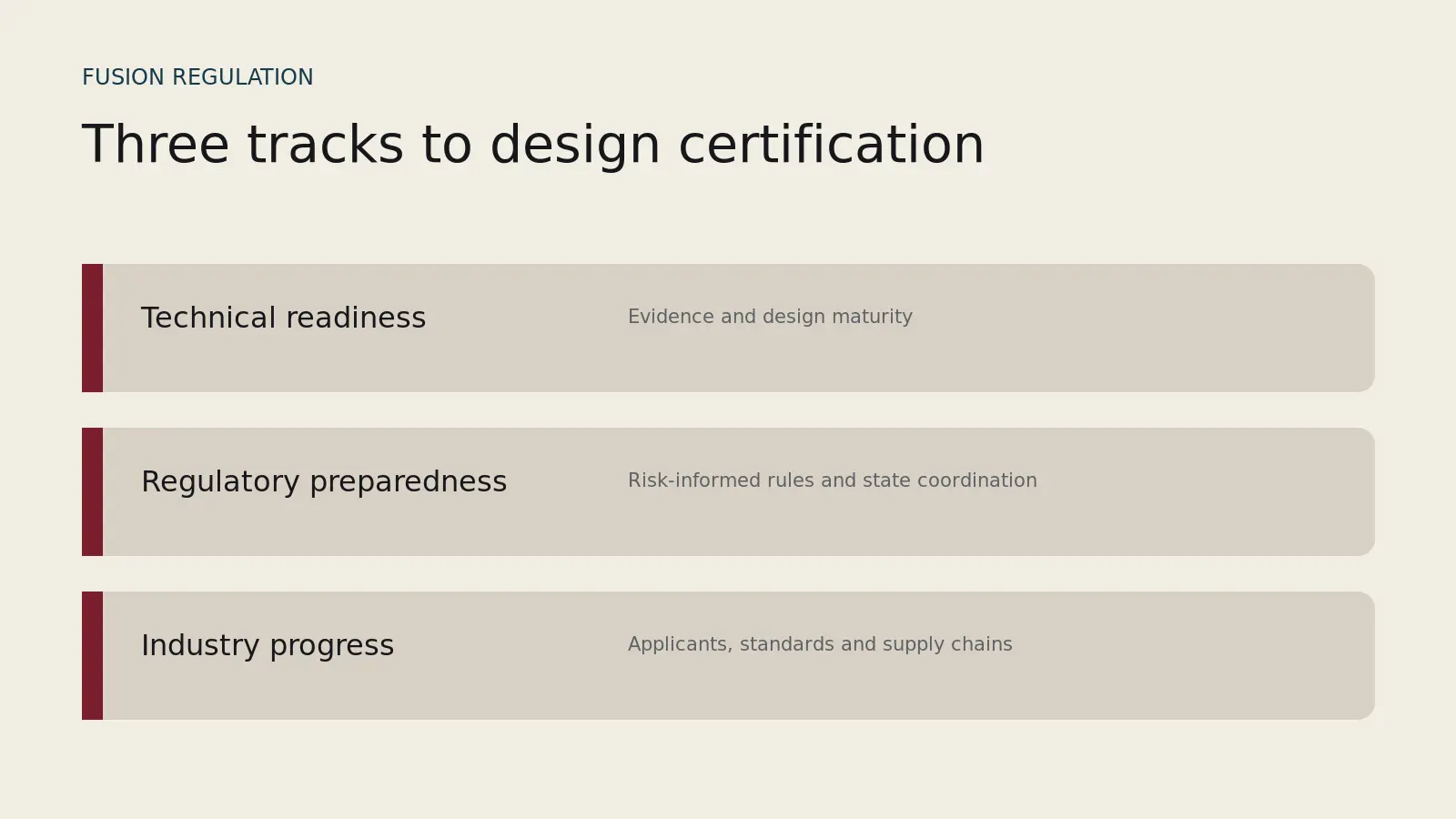
The proposed U.S. framework is technology-inclusive and risk-informed. Its value will depend on implementation, applicant discipline and rules that survive first contact with commercial-scale machines.
Regulatory clarity is often described as paperwork completed before the real engineering begins. In fusion it is part of the engineering environment. A developer that knows which hazards, records and operating programmes a regulator will examine can design for them early. One that guesses may discover late that its safety case and its machine have grown apart.
The Nuclear Regulatory Commission’s 2026 proposed rule takes a technology-inclusive, risk-informed approach under the byproduct-material framework. That is a genuine competitive asset for the United States. It recognises that fusion machines vary and that regulation should focus on actual radioactive-material and activation hazards rather than import the full logic of a fission plant by analogy.
But a proposal is not a licensed fleet. The framework must still be finalised, interpreted and used. Applicants will need credible descriptions of radiation protection, training, material handling, emergency procedures and organisational responsibility. Regulators will need enough technical capacity to ask consistent questions without turning pre-application engagement into bespoke policy for each company.
What the proposed framework advances, and what remains
| Area | Direction now | Implementation test |
|---|---|---|
| Regulatory basis | Byproduct-material framework | Consistent treatment across machine designs |
| Design philosophy | Technology-inclusive and performance-based | Evidence requirements that are clear before application |
| Hazard focus | Radioactive material and activation products | Proportionate treatment of plant-specific inventories |
| Applicant readiness | Defined application content | Mature operating, training and radiation programmes |
| Institutional capacity | Pre-application engagement | Repeatable review practice and published precedent |
The risk is symmetrical. Rules can become so prescriptive that they freeze an immature field, or so vague that every first application invents a new standard. A durable regime states performance expectations clearly, scales oversight to hazard and publishes enough precedent for later applicants to learn.
Speed and rigour need not be opposing aims. Early engagement can identify missing evidence while a design is still adjustable, reducing both review time and late redesign. It can also produce an unhealthy dependence on informal conversations if applicants cannot tell which guidance will govern the formal decision. Written positions, common data expectations and a public account of recurring questions would make the first reviews useful to the firms that follow.
America leads because it has moved the argument from whether fusion is different to how its differences should be governed. It will keep that lead only if clarity at the top becomes predictable practice at the licensing desk.